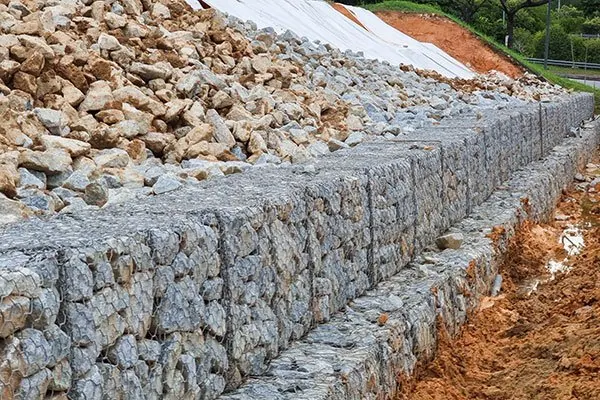
Why the ground comes first
Most retaining wall problems start below the surface. A footing set on loose, uncompacted sand will settle. A level pad built from fill that was dumped in one go will sink at the edges. A trench cut too narrow leaves no room for drainage gravel behind the wall.
Levelling and firming up the ground before any wall material arrives is the right order of work. Getting the levels and the base right is cheaper than repairing a wall later.
What earthworks for a wall usually include
Set-out. Marking the wall line, the finished levels at each end and any steps along the way. On sloping ground, a laser level or string lines are used to keep everything true.
Cut and fill. Removing sand from the high side, placing it on the low side, or both. The aim is a wall that holds back the least ground it needs to, with level areas where you want them.
Footing trench. Excavating to the right width and depth for the chosen wall type, and down to firm ground. Where limestone rock is found, the trench may need to be broken out or the footing design adjusted.
Compaction. Placing fill in thin layers and compacting each one. Damp sand compacts better than bone-dry sand, which is why you may see the crew wetting it down.
Drainage zone. Leaving room behind the wall for fabric, gravel and a slotted pipe, and planning where the water will go.
Spoil. Spreading surplus sand on site, stockpiling it for backfill, or loading it out.
Machines and access
Most residential wall jobs in the Peel are done with small machines:
- Mini excavators for digging trenches and moving material in tight spaces.
- Skid steer loaders (commonly called bobcats) for moving sand, levelling and loading trucks.
- Plate compactors and rollers for compaction.
- Tip trucks for carting spoil and bringing in drainage gravel or fill.
Access is the first thing the contractor checks. Narrow side passages, steep driveways, soft lawn and fences that have to come down all affect which machine can be used and how long the job takes. On some lots part of a fence is removed temporarily to get a machine in, and that should be agreed in writing.
Sandy ground, limestone and water
Coastal sand is easy to dig but collapses easily too. Trenches in dry sand slump, so they are often dug and filled in the same day.
Sand over limestone can mean hitting rock unexpectedly. If there is a chance of rock, the quote should say how it will be handled and priced.
High water tables near the estuary and canals limit how deep you can dig before water appears, especially in winter. That can change the footing design or the timing of the job.
Clay-loam around Pinjarra and the river flats holds water and is harder to compact when wet, so drainage and timing matter more there.
Before any digging
Before You Dig Australia is a free service that tells you where underground utilities run, and a contractor should check it before excavating. Septic tanks, leach drains, soak wells and reticulation lines are not on that register, so point out anything you know about on your own block.
If you are changing the level of the ground near a boundary, talk to the neighbour, and check with the City of Mandurah or the Shire of Murray about any planning requirements.
Earthworks with your wall
Site prep is normally quoted as part of the wall job by the same contractor, so there is one person responsible for the ground and the wall on top of it. Read about the wall types on the limestone, concrete sleeper, timber and block pages, and see the cost guide for how earthworks affects the overall price.
Getting a quote
Call (08) 9515 3332 or use the form below. Mention access width, how much the ground falls across the block, and what you want the finished levels to be.